In today's fast-paced world, where every cent counts and time is more valuable than ever, managing personal finances can be a real challenge. But the days of tracking expenses and income in notebooks — costly in both time and effort — are behind us. This article isn't just about budgeting apps; it's about understanding your spending and the tools that can change your relationship with money.
The challenges of traditional budgeting and tracking
How much time have you spent hunting for receipts, writing expenses into notebooks, and constantly changing the categories you sort them into? Traditional budgeting methods, while tried and tested, often don't fit our modern, fast-moving lifestyle. They're time-consuming, prone to human error, short on real-time insight, and do little to encourage or motivate ongoing financial awareness.
A look at popular budgeting apps
These days, budgeting apps have become the superheroes of personal finance. Switching from a traditional budget to using an app is sometimes compared to trading a bicycle for a sports car. Apps like Mint, YNAB (You Need A Budget), and PocketGuard have become especially popular. They pack in a range of features designed not just to make managing money easier, but to help you save effectively. These apps let you track spending directly and give you insightful reports that help you understand your spending habits.
Mint
Mint is one of the most popular free budgeting apps. It's known for its all-round approach to managing personal finances. Here's an overview of its key features.
Automatic syncing: automatically syncs with your bank accounts, credit cards, loans, and investment accounts, giving you a real-time overview of your finances.
Expense tracking and categorization: sorts your transactions into categories, so it's easy to see where your money is going. You can also create custom categories.
Budget building: lets you build a budget for different spending categories. It will warn you when you're about to go over budget.
Credit score monitoring: gives you free credit score monitoring, along with useful insights.
Bill payment reminders: sends reminders about upcoming bills so you avoid late payments.
Investment tracking: lets you track your investments and compare your portfolio against others.
YNAB (You Need A Budget)
YNAB takes a proactive approach to budgeting, emphasizing planning and goal-setting. It's a subscription-based app with a strong focus on financial education. Here's an overview of its key features.
Zero-based budgeting: YNAB works on the principle that every dollar has a job, making sure you allocate your income with purpose.
Goal tracking: lets you set specific financial goals, such as paying off debt or saving for a big purchase.
Real-time information: like Mint, YNAB syncs with your bank accounts to give you up-to-date financial data.
Educational materials: YNAB offers plenty of educational content, including free workshops, to help users make better financial decisions.
Reports and insights: the app provides detailed reports that help you understand spending patterns and progress toward your goals.
Accountability: encourages you to share your budget with a partner or friends to stay accountable.
PocketGuard
PocketGuard is built to be simple and easy to use, making it ideal for people who want a straightforward approach to budgeting. Here's a look at its key features.
Real-time information: calculates how much disposable income you have after setting aside money for bills, goals, and unexpected expenses. It answers the question: "How much can I spend?"
Bill negotiation service: a unique service that helps negotiate better rates on your bills.
Spending limits: lets you set spending limits across different categories to control your expenses.
Customizable budgets: like other apps, PocketGuard lets you build a custom budget.
Debt payoff plan: the app's features help you build a debt payoff plan and stick to it.
Subscription management: identifies and tracks your subscriptions, helping you manage recurring expenses.

How do you choose the right app for you?
Choosing the right budgeting app is a bit like finding the perfect pair of shoes — it needs to fit your lifestyle and financial situation. Here's how to pick the right one:
Define your needs
Are you a freelancer who needs to track variable income, or do you simply want to rein in impulsive, unplanned purchases? Some apps specialize in debt repayment, while others focus on building savings.
Ease of use
An app should simplify your life, not complicate it. Look for an intuitive interface and user-friendly design.
Security
Make sure the app has solid security measures in place to protect your financial data.
Integration with your bank
Choose one that integrates smoothly with your bank accounts and credit cards. Your financial data updates in real time, and transactions are automatically sorted into categories, keeping things accurate.
Price
Some apps are free with basic features, while others charge a subscription for premium services. Think about how much you can and want to pay.
Reviews and recommendations
Read user reviews and ask friends or family about their experience.
ESTO credit line
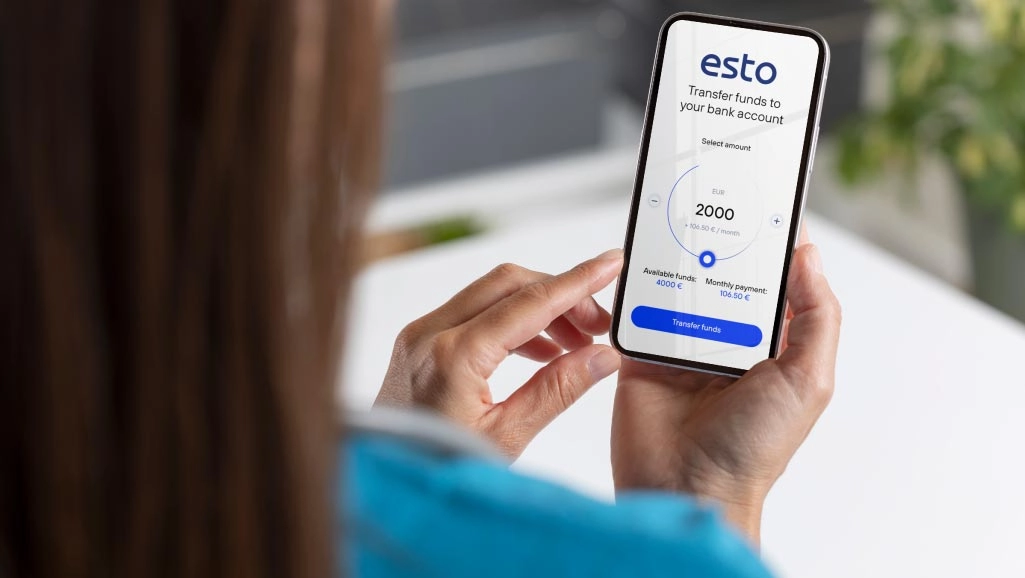
Another smart, convenient way to manage your day-to-day finances is an ESTO credit line. This service helps you manage cash flow more effectively, avoid overloading your budget, and — unlike other forms of credit — decide for yourself how much money you use and when you pay it back. Whether it's new appliances for your home, the holiday you've been dreaming of, or a car that makes your daily commute easier. If you need money here and now, use an ESTO credit line.
Example of an ESTO credit line: repaying a borrowed 300 EUR (minus the payout fee) over the first 3 months, paying a monthly installment of at least 109.27 EUR and a payout fee of 10.50 EUR, the annual interest rate is 53%, the monthly administration fee is 0 EUR, the total amount payable by the customer is 327.79 EUR, and the APRC is 70.99%. Terms may vary depending on the amount chosen, the size of the monthly installments, or the results of the creditworthiness assessment.
Powering your financial journey
Using a budgeting and tracking app is more than just a financial decision; it's a lifestyle choice that reflects a commitment to achieving your financial goals. Apps bring clarity, are easy to use, help you manage spending, and keep you from getting lost in the complex world of personal finance. When choosing the right one, consider your financial goals, ease of use, integration options, and security measures.
Start your journey toward financial freedom today. Pick the app you like best and take the first step toward a more secure, confident future. And if you want to learn more about saving money day to day, read our other article: 4 Tips for Saving Money Every Day.