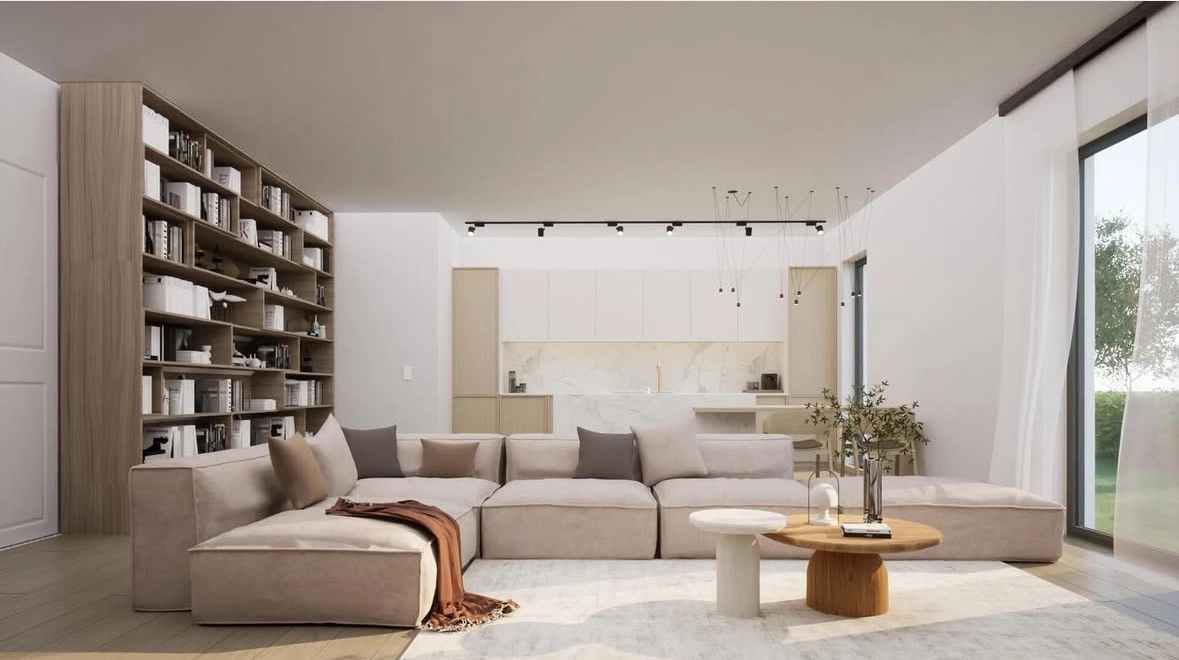
Planning to refresh your home this year? Whether you're taking on a full renovation or just changing up a few key spaces, making the right calls early on can save you time, money, and a lot of headaches. It's tempting to fall for the beautiful design shots you see in photos, but everyday life often shows what actually works.

To help you understand this better, we talked to Julia Zarechneva, an experienced interior design enthusiast and former furniture project manager at major Estonian developers' offices, including Kaamos and Scandium. Having designed more than 150 rental homes, Julia knows exactly what makes a home not just look good, but feel good and comfortable to live in.
Here's her take on what to prioritise, what to avoid, and how to design a home that stands the test of time.
Design traps that look good but don't always work
"A great example is a black kitchen," Julia says. "At first it looks incredibly stylish, but in reality dark surfaces easily show fingerprints and water marks. It quickly turns into a tiring maintenance problem."
The same goes for black taps and sinks, where mineral build-up can form depending on your local water quality.

Large-format tiles (say, 120×60 cm) are trending now too, but in smaller rooms they often need to be cut down too much, which ruins the seamless effect they're supposed to create.

Flooring is another area where practicality matters. Natural wood parquet can look beautiful, but if you have pets or young kids, more durable, smarter options — like quartz vinyl — are worth considering.

What's in right now — and what could stick around
"Minimalism is still popular, especially in Estonia, but it's evolving," Julia explains. "People want homes that aren't just clean and spacious, but warm and comfortable too."
That means more soft textures, muted earth tones, and natural materials like warm wood, stone, and handmade ceramics.

Bold accent walls in bright colours are fading out. What's taking their place? Swappable "vitamin accents" — cushions, art pieces, or vases that add colour without any commitment.
Styles like modern eclectic, Japandi (a mix of Japanese calm and Scandinavian cosiness), and biophilic design are on the rise, offering a blend of visual interest and everyday comfort.

"These trends aren't just short-lived fashion," Julia says. "They reflect a deeper move toward sustainable, calming, functional homes."
A small but important detail
"Size!" Julia laughs. "It sounds simple, but it's mistake number one people make."
Furniture can end up not fitting into the room — or through the hallway, stairwell, or lift. Always plan carefully, and don't forget to account for the space needed for drawers, walkways, and door swing.
She also warns against relying too much on photos online: "Photos can distort colour and texture. What looks like a soft sand colour can turn out to be cold grey in reality. A photo can't let you feel the material or see how drawers open and close."
Where possible, try items in person before buying, or ask for samples. A few extra steps upfront can save you a lot of disappointment.

One more tip for every homeowner: budget first
"Without question, the most important step is setting a clear, realistic budget," Julia stresses. Buying furniture piece by piece with no plan often means overspending, especially once impulse purchases join in. Delivery fees, assembly, and getting rid of old furniture and new packaging are hidden costs people tend to overlook.
Julia also stresses functionality: "Furniture has to look great and fit your lifestyle. If you have kids, pets, or limited space, those needs should shape what you choose."
For example, open shelving can look great in photos, but in real life it needs constant tidying.
If the upfront investment looks too big, consider a home renovation small loan. With smart financing, you can make well-planned, long-term decisions without sacrificing quality — and avoid the stress of one big upfront cost.